
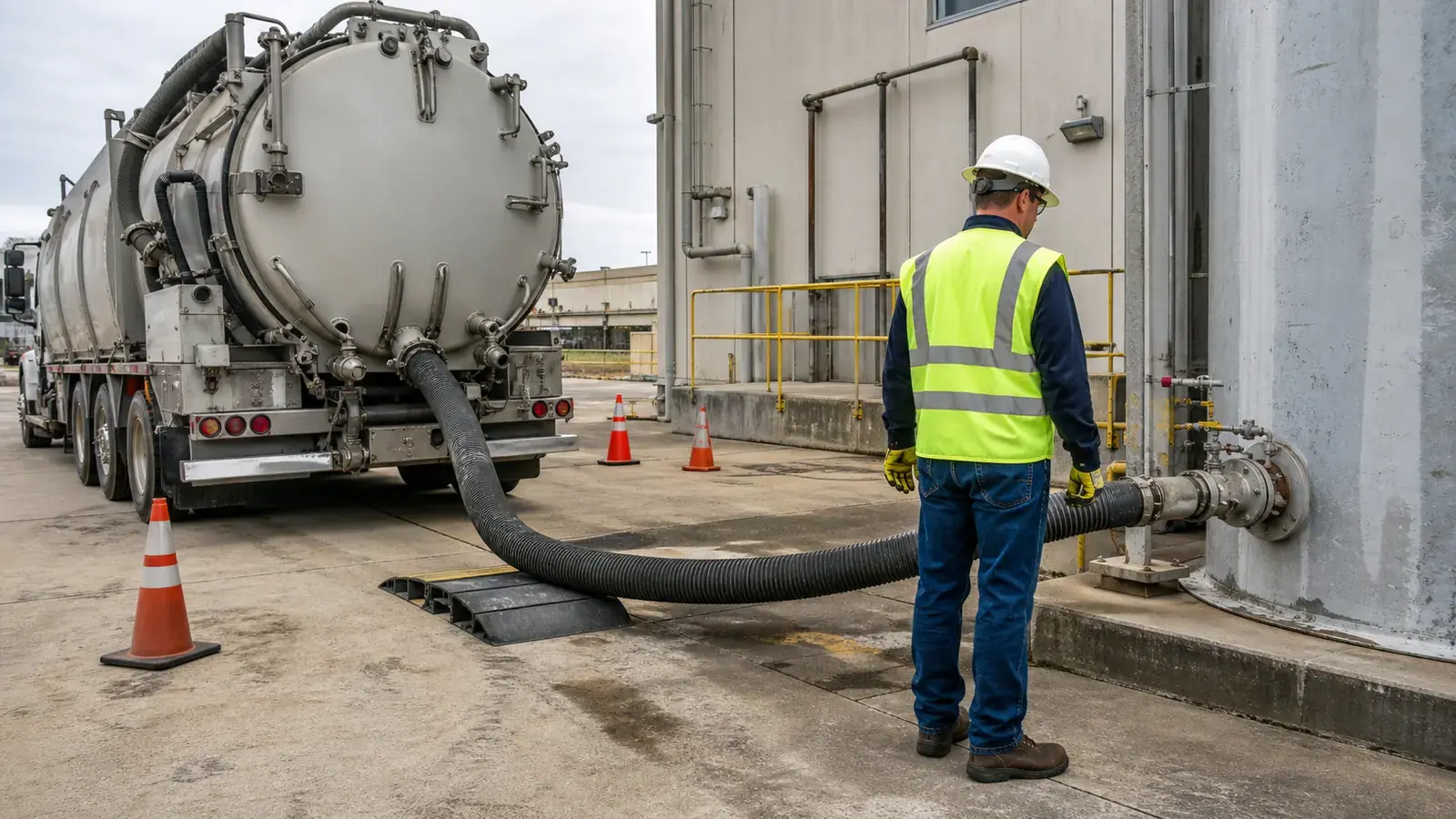
Tank Washout and Pump-Out Services for Industrial Projects
United Environmental Solutions handles tank, vessel, pit, sump, piping, equipment, and containment projects that require controlled removal, cleaning, waste management, and closeout.
The scope begins with the contents, tank configuration, access, isolation status, transfer distance, cleaning objective, and destination requirements.
Pump-Out, Washout, Changeover, Closure, or Maintenance
A tank may need to be emptied for inspection, product change, maintenance, decommissioning, spill cleanup, system transition, or final closure. Each objective creates different expectations for residual removal, wash water, visual condition, sampling, entry, and documentation.
UES develops the environmental service plan around the facility's approved operating and safety requirements.
Connect the Tank Work to the Material Pathway
- Review contents, heel, sludge, residue, and product history
- Plan pump-out, transfer, temporary storage, and containment
- Define washout or cleaning objectives
- Manage wastewater, rinsate, sludge, solids, and disposable PPE
- Address tank, piping, equipment, or vehicle-system configuration
- Define transportation, receiving, and applicable final records
Confined-space entry, isolation, lockout, ventilation, atmospheric testing, and rescue requirements must be defined within the approved site-specific scope when applicable.
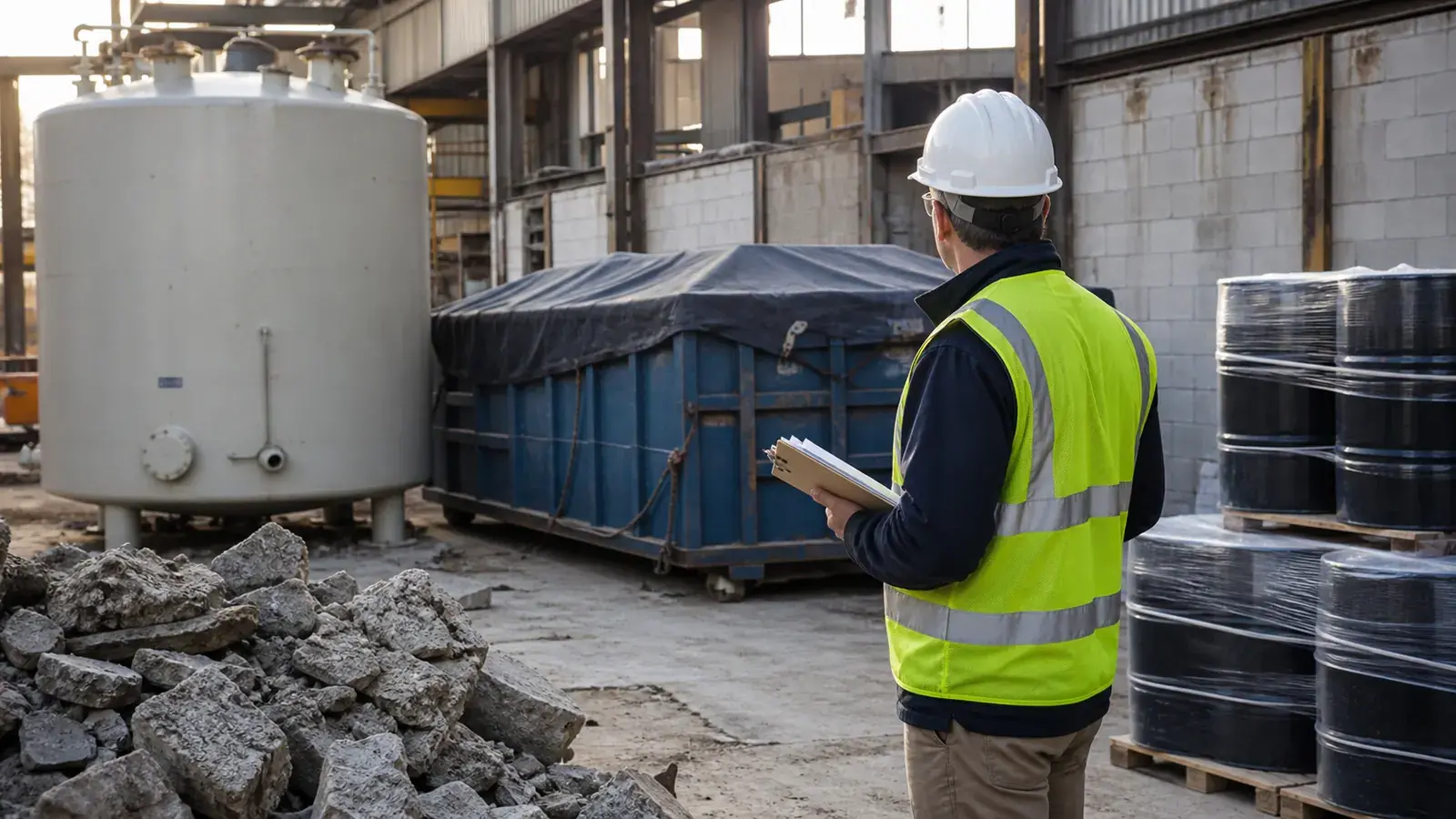
The Tank Is Only One Part of the Project
Contents, access, connections, transfer equipment, receiving capacity, transportation, and final disposition must work together.
Tank Geometry and Access Matter as Much as Volume
Provide tank type, dimensions, capacity, estimated contents, product history, drawings or photographs, access points, hose distance, elevation, isolation status, nearby utilities, site restrictions, cleaning objective, location, and schedule.
Existing SDS files, analysis, prior profiles, and maintenance records can help identify the next technical questions.
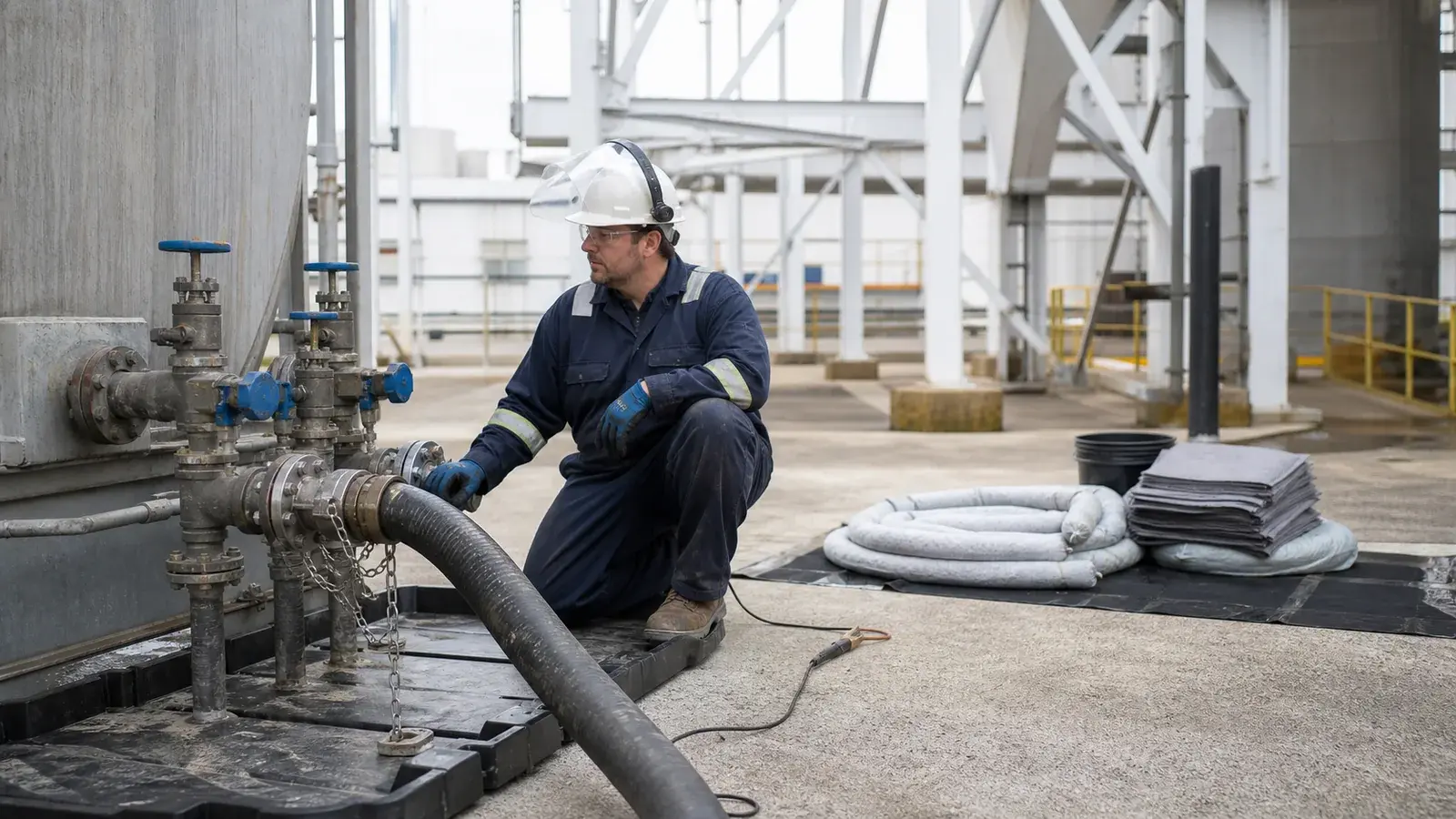
Plan the Transfer Before the Crew Arrives
Tank contents, access, fittings, hose distance, elevation, containment, equipment, receiving capacity, and the final material pathway should be considered together before a field scope is proposed.
Frequently Asked Questions
Can You Pump Out and Clean the Same Tank?
Yes, when removal, cleaning, residual management, access, and safety requirements are included in the approved scope.
Is Confined-Space Entry Always Required?
No. The tank, task, access, and cleaning objective determine whether entry is required. Applicable requirements are evaluated for the specific project.
What Happens to Wash Water and Sludge?
Those streams are characterized and addressed within the project plan. No destination is assumed before review.
Define the Tank, Contents, and Cleaning Objective
Provide capacity, estimated contents, configuration, access, transfer distance, location, schedule, and available records.