

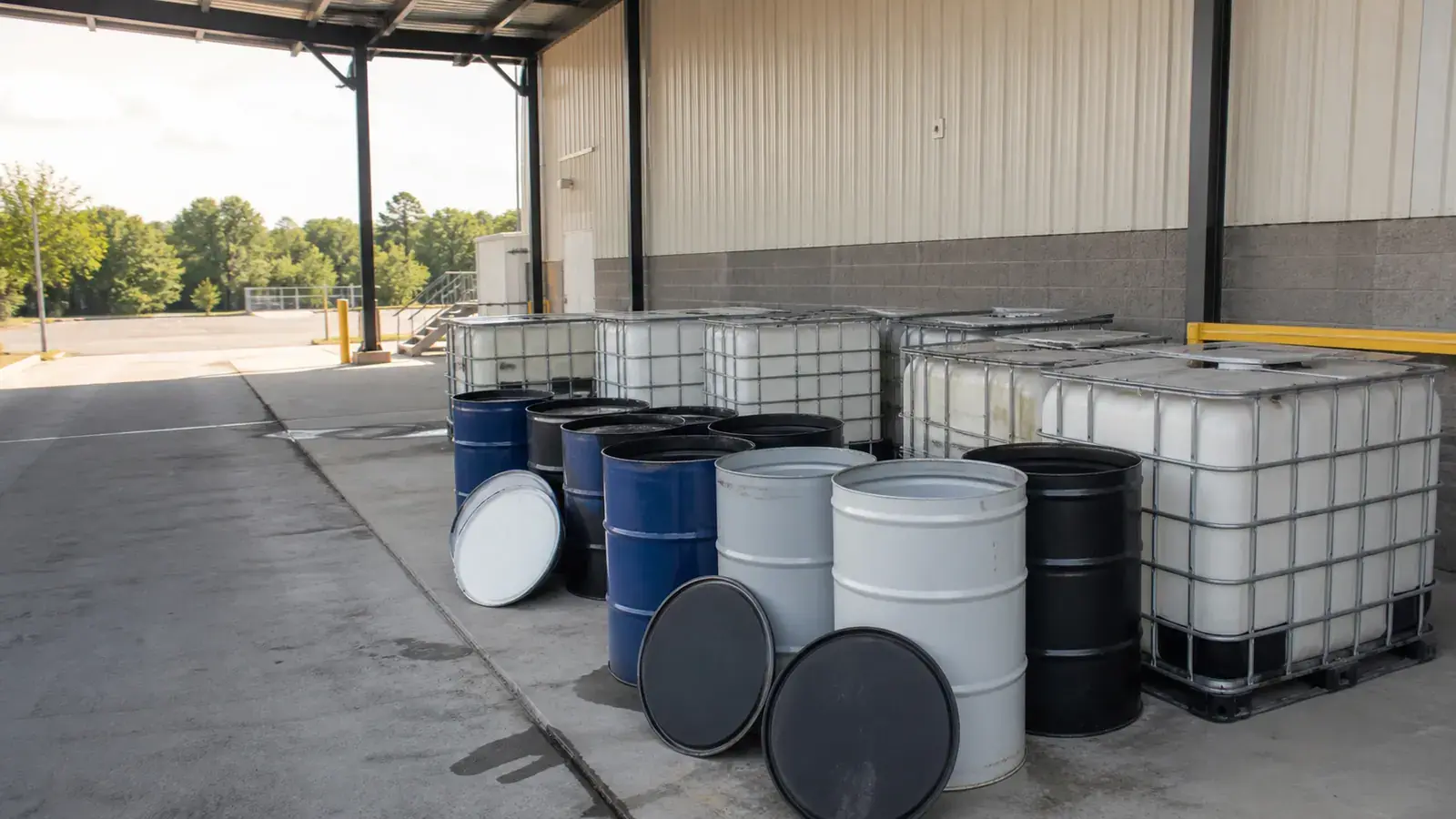
Commercial Drum and Tote Disposal
Send full, partially full, and empty drums, totes, and IBCs for project-specific review. Material, quantity, container condition, and destination requirements determine the available route.
United Environmental Solutions handles commercial container inventories as stand-alone projects or as part of a larger facility cleanout. Inventory full, partial, and empty containers separately; acceptance remains subject to review.
Prior Contents and Remaining Residue Matter
Closed-head drums, open-head drums, totes, pails, cylinders, and other containers can retain liquids, solids, vapors, liners, sludge, or product residue. Container condition and prior contents affect handling, transportation, cleaning, recycling, reconditioning, or disposal options.
Do not drain, rinse, vent, cut, crush, or consolidate containers solely to prepare a request.
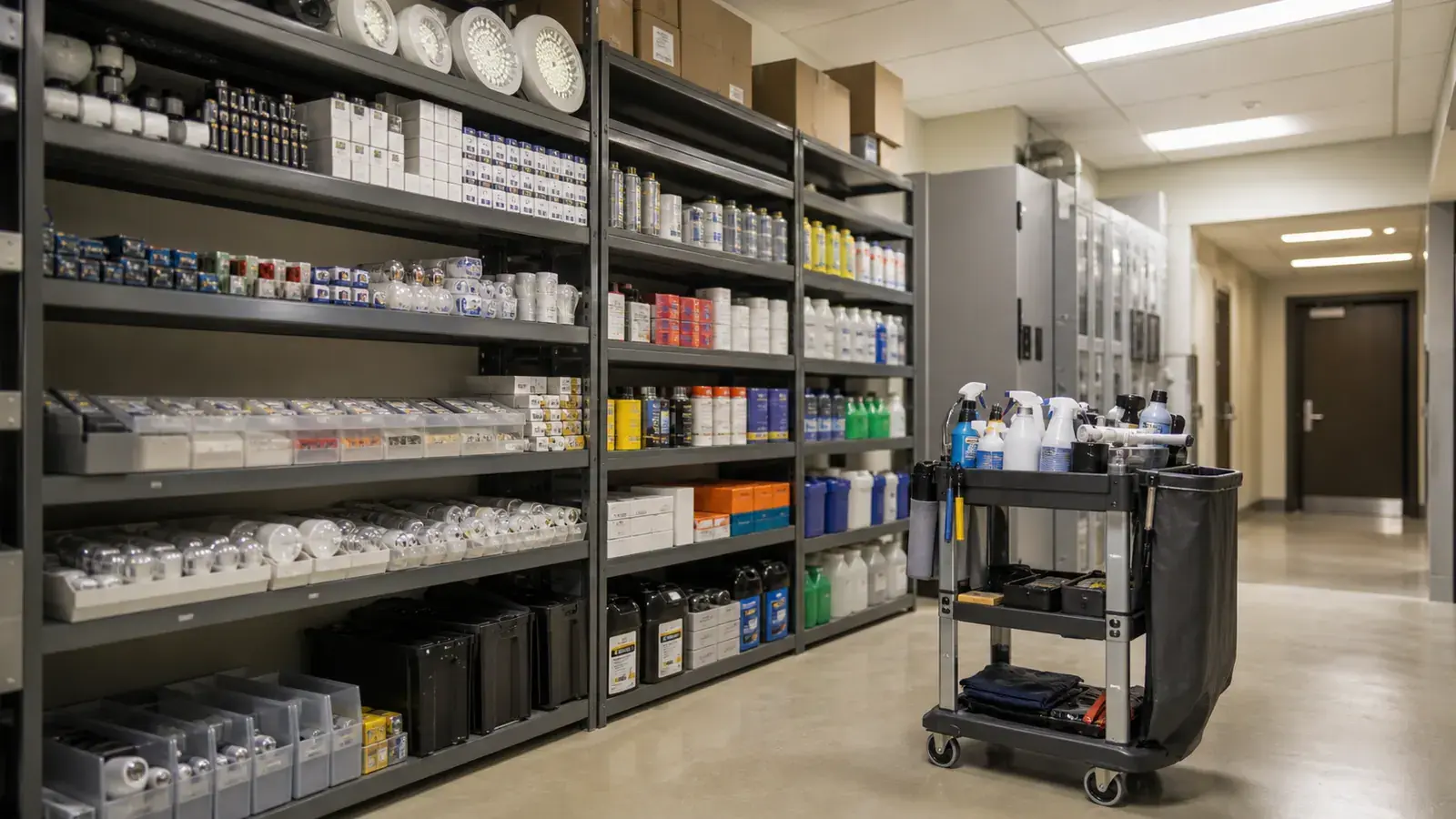
Empty Containers Still Need Project-Specific Evaluation
Previous contents, residuals, container condition, quantity, location, and destination requirements guide the available route.
Single Loads, Facility Cleanouts, and Recurring Accumulations
- Steel, plastic, and fiber drums
- Intermediate bulk containers and totes
- Pails and smaller industrial containers
- Palletized container inventories
- Containers with liners or residual solids
- Damaged, bulging, corroded, leaking, or unknown containers requiring separate review
- Mixed inventories with full, partial, and empty containers
Identify full or partially full containers separately from containers believed to be empty.
Build the Count by Container Type and Prior Material
Provide container size, construction, quantity, closure type, prior contents, estimated residue, labels, condition, location, loading access, and photographs. Include SDS files or product information for prior contents when available.
The approved path may differ across material groups within the same container inventory.
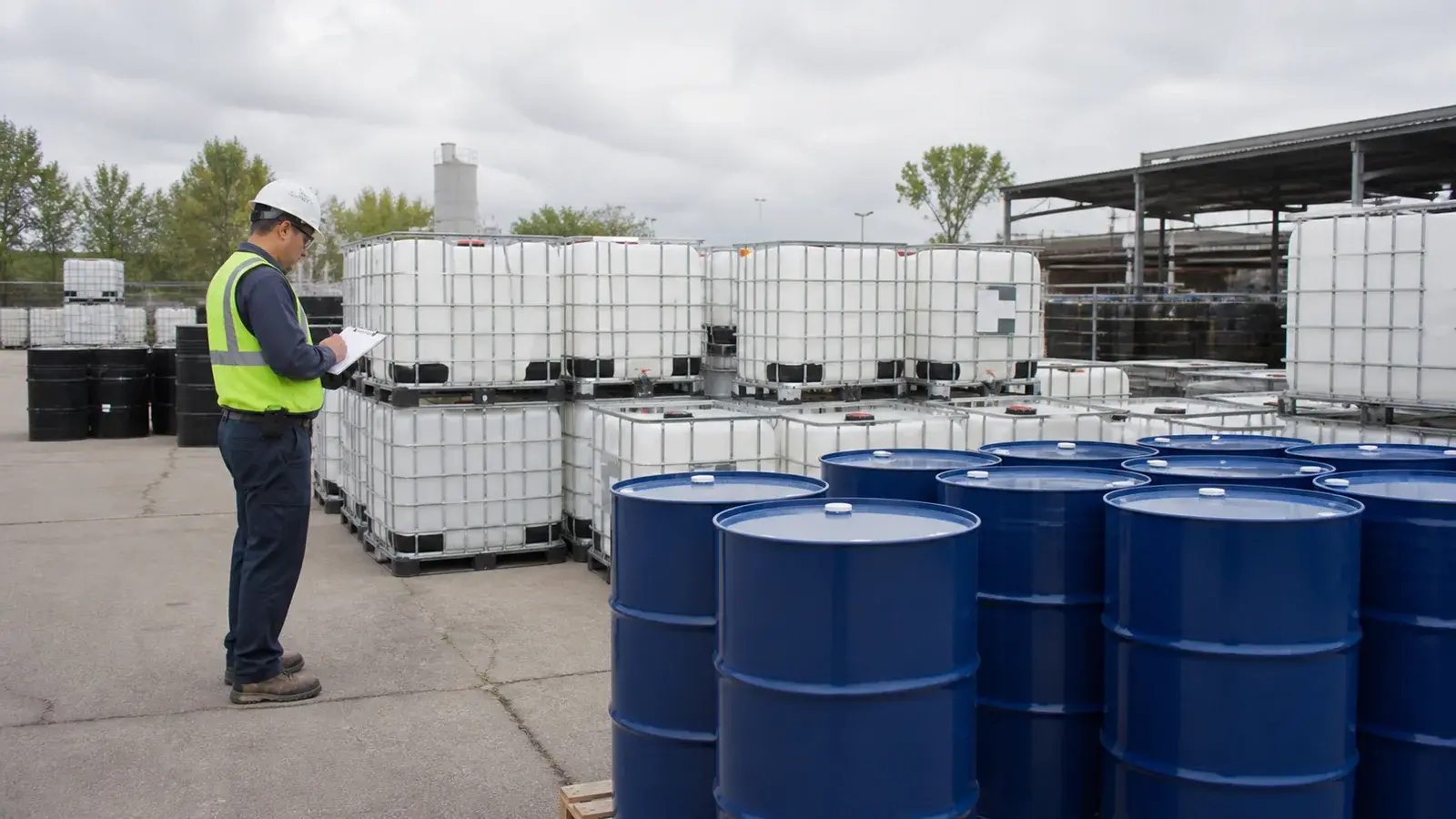
Previous Contents Still Matter
A container described as empty may still require information about its former contents, residuals, closure, condition, quantity, and intended pathway. Clear photographs can help the initial review without replacing any required determination.
Frequently Asked Questions
Can You Handle Containers with Unknown Prior Contents?
They can be submitted for evaluation, but unknowns may require separate assessment before movement or acceptance.
Do Containers Need to Be Rinsed First?
Do not rinse containers unless that step is already part of an approved facility procedure and project plan. Residue and rinsewater may create separate material streams.
Can Full and Empty Drums Be Picked Up Together?
They can be reviewed in one request, but full, partial, and empty containers should be inventoried separately.
Send the Drum and Tote Inventory
Include counts, sizes, construction, prior contents, residual condition, labels, photographs, location, and access.