

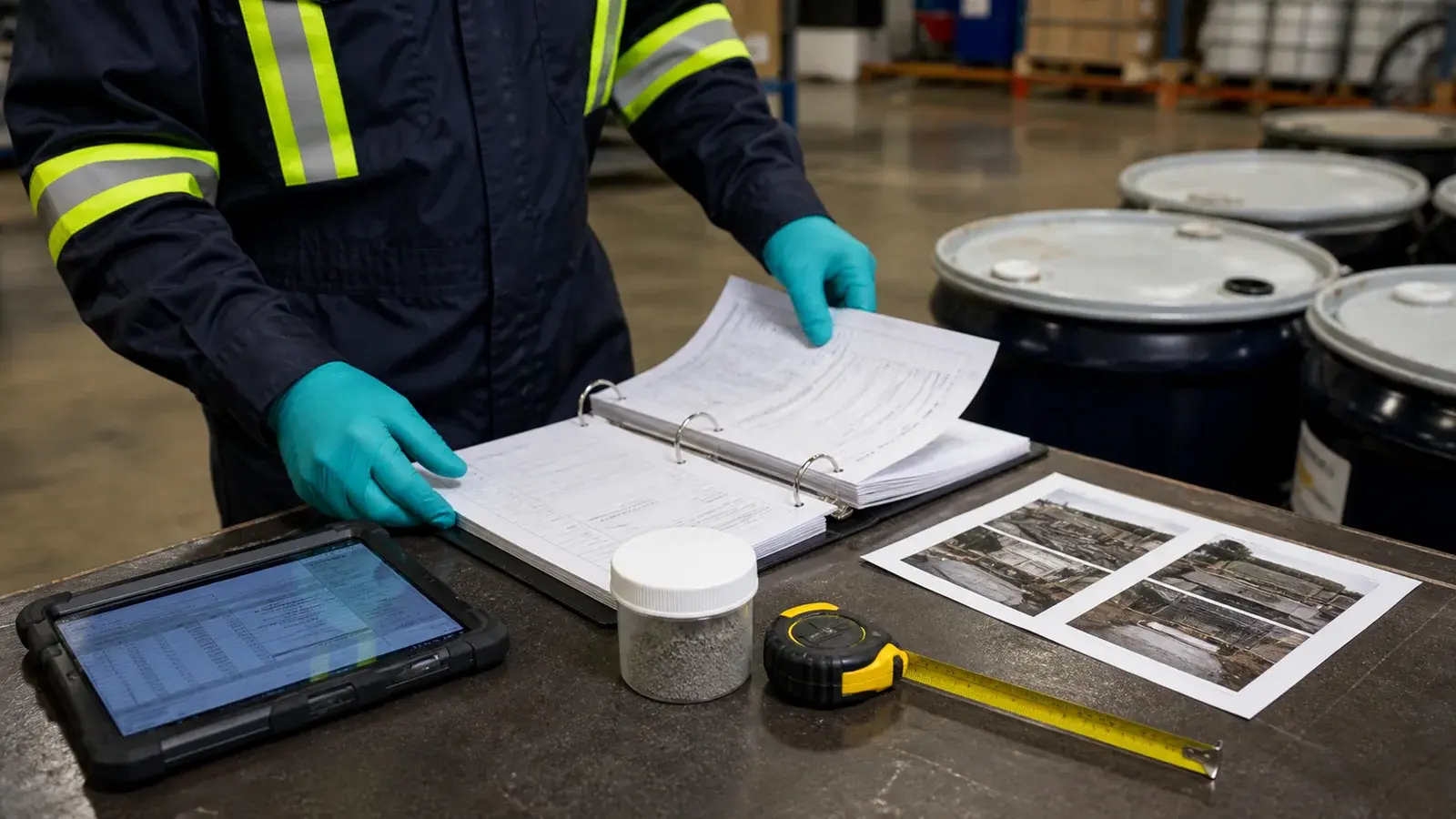
A useful waste profile typically includes the generating process, material composition, physical state, applicable waste codes or characteristics, quantity, packaging, analytical data or generator knowledge, and relevant handling information. The required fields and supporting records depend on the waste stream and the receiving facility.
A Profile Describes the Waste as Generated
EPA regulations require a hazardous waste determination at the point of generation before dilution, mixing, or another alteration. A profile should therefore describe the waste-producing process and the material as it actually exists when it becomes waste.
For example, an SDS for unused solvent can support the review, but it may not describe spent solvent that contains oils, metals, water, solids, or other contaminants from the process. The profile should distinguish product information from waste-specific information.
Generator Knowledge and Testing Serve Different Roles
Generator knowledge can include process knowledge, chemical inputs, product information, operating records, prior analysis, and other reliable information about the waste or its constituents. When available knowledge is inadequate for an accurate determination, testing may be required using applicable methods.
Testing should answer a defined question. A broad laboratory panel is not automatically better than a targeted analysis. The method, sample location, representativeness, detection limits, and intended decision should align with the material and receiving requirements.
Common Profile Inputs
The exact form varies, but the following information often supports the review:
- Generator name and site information
- Generating process and source of the waste
- Material composition and physical state
- Known hazardous characteristics or listed-waste basis
- pH, flash point, metals, organics, or other applicable analytical data
- Estimated annual or project quantity
- Container type, size, condition, and shipping frequency
- Special handling concerns and requested destination method
Why a Profile May Need Revision
A waste stream can change when raw materials, formulations, equipment, maintenance practices, contaminants, or generating processes change. EPA guidance also addresses making a new determination when a waste may have changed properties during management.
A profile should not be reused mechanically when the underlying waste no longer matches it. Review profiles when operations change, when results conflict with the description, or when the load differs in appearance, quantity, packaging, or condition.
Profile Approval Is One Part of the Project
A destination profile may support acceptance of a defined waste stream, but the project still needs packaging, transportation, scheduling, shipping documents, quantity, site access, and load-specific conditions to align.
Keep the approved profile, supporting records, revisions, and shipment documents traceable to the correct facility and waste stream. Good document control makes future shipments easier to review and helps the generator explain how the determination was supported.
Frequently Asked Questions
Is an SDS the same as a waste profile?
No. An SDS describes a product and can support the review, but a waste profile describes the waste stream, generating process, condition, composition, quantity, and other project-specific facts.
Does profile approval guarantee every shipment?
No. Each shipment must still match the approved waste stream and meet current packaging, transportation, destination, scheduling, and project requirements.
Who is responsible for the hazardous waste determination?
The generator is responsible for making an accurate hazardous waste determination under applicable requirements. Service support can help organize information, testing, profiles, and destination questions.
Official References
Regulations and guidance can change. Review the current source and applicable state requirements before making a project decision.
This article provides general information and does not replace project-specific legal, regulatory, engineering, safety, or technical advice.