For a commercial waste quote, provide the material or process description, physical state, estimated quantity, container type and condition, city and state, access conditions, desired project window, and available records. Identify unknowns instead of guessing. The stronger the starting information, the easier it is to define assumptions and determine what must be confirmed before service.
Start With the Material and How It Was Generated
A product name alone may not describe a waste stream. Explain what the material is, what process produced it, whether it is unused product or process waste, and what may have changed since the original product was purchased. This context helps distinguish an SDS for a virgin product from information about the waste as it exists now.
Do not choose a classification simply because it seems likely. Under federal hazardous waste rules, the generator is responsible for an accurate waste determination. Available knowledge may support that determination, and testing may be necessary when knowledge is not adequate.
- Material or product name
- Generating process and reason for disposal
- Known ingredients or contaminants
- Physical state, such as liquid, solid, sludge, powder, or debris
- Whether the material is unused, spent, mixed, damaged, or unknown
Count the Material in Operational Units
Quantities should be specific enough to plan packaging, equipment, transportation, and destination capacity. A statement such as several drums leaves major questions unanswered. A better starting point is six 55-gallon steel drums, approximately three-quarters full, or one 275-gallon tote containing an estimated 180 gallons.
For mixed inventories, group similar materials but keep different physical states, container types, and known hazards separate. For bulk material, include estimated volume or weight and the tank, pit, sump, roll-off, pile, or other storage configuration.
Document Packaging, Condition, and Access
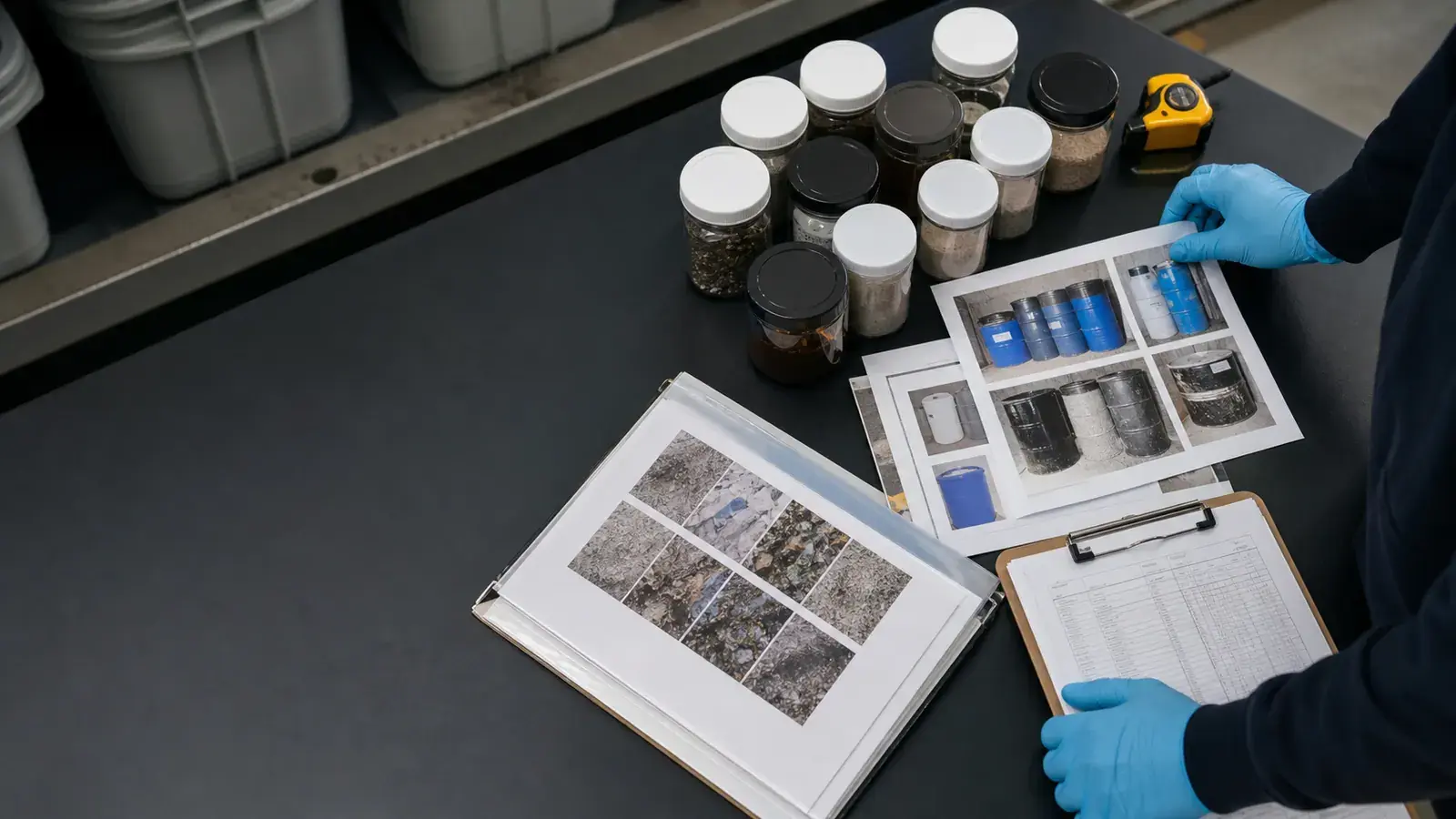
Container condition can change the project. Note corrosion, swelling, leakage, missing closures, damaged pallets, unreadable labels, crystallization, pressure concerns, or any other visible issue. Do not open, move, sample, consolidate, or approach material unsafely to obtain quote information.
Site access also matters. Identify loading docks, ground-level access, stairs, elevators, narrow doors, security procedures, required appointments, hose distances, overhead restrictions, and whether material is indoors or outdoors. These details help determine which equipment and field requirements belong in the scope.
Send Available Records, Not an Artificially Perfect File
Useful records may include SDS files, inventories, laboratory results, prior profiles, shipping documents, process descriptions, tank drawings, specifications, and photographs that can be taken safely. A clearly labeled unknown is more useful than a confident but unsupported answer.
State what your organization needs at closeout. Profiles, manifests, bills of lading, receiving records, weight records, Certificates of Destruction, laboratory reports, and service summaries are not interchangeable. The expected record set should be defined in the approved scope.
Explain the Schedule Without Assuming Availability
Provide the desired project window and the operational reason behind it. A facility shutdown, lease turnover, trailer detention, production change, bid deadline, or storage limitation gives the team useful planning context.
A requested date is not the same as a confirmed service date. Timing depends on the material, information quality, acceptance, equipment, transportation, access, capacity, and approved scope. Time-sensitive situations can be submitted for review, but no fixed response or pickup time should be assumed until confirmed.
Frequently Asked Questions
Do I need laboratory analysis before requesting a quote?
Not always. Send the process knowledge, SDS files, prior records, and analysis already available. Additional testing may be needed when existing knowledge is not sufficient for an accurate determination or receiving decision.
Can I request a quote if some containers are unknown?
Yes. Identify the unknown containers separately and describe only what can be observed safely. Unknowns may require additional review, sampling, or a different scope.
Will a quote confirm that the waste has been accepted?
The approved proposal should state its assumptions, scope, timing, and conditions. A website submission alone does not confirm acceptance, destination, pricing, or scheduling.
Official References
Regulations and guidance can change. Review the current source and applicable state requirements before making a project decision.
This article provides general information and does not replace project-specific legal, regulatory, engineering, safety, or technical advice.