
Before requesting PFAS or AFFF disposal, document the foam product, estimated volumes, physical state, containers or system components, tank and piping configuration, project stage, location, planned transition, available testing, and required records. Keep concentrate, rinsate, solids, and equipment-related materials separated in the inventory because one description may not fit every stream.
Start With a Material Inventory and a System Inventory
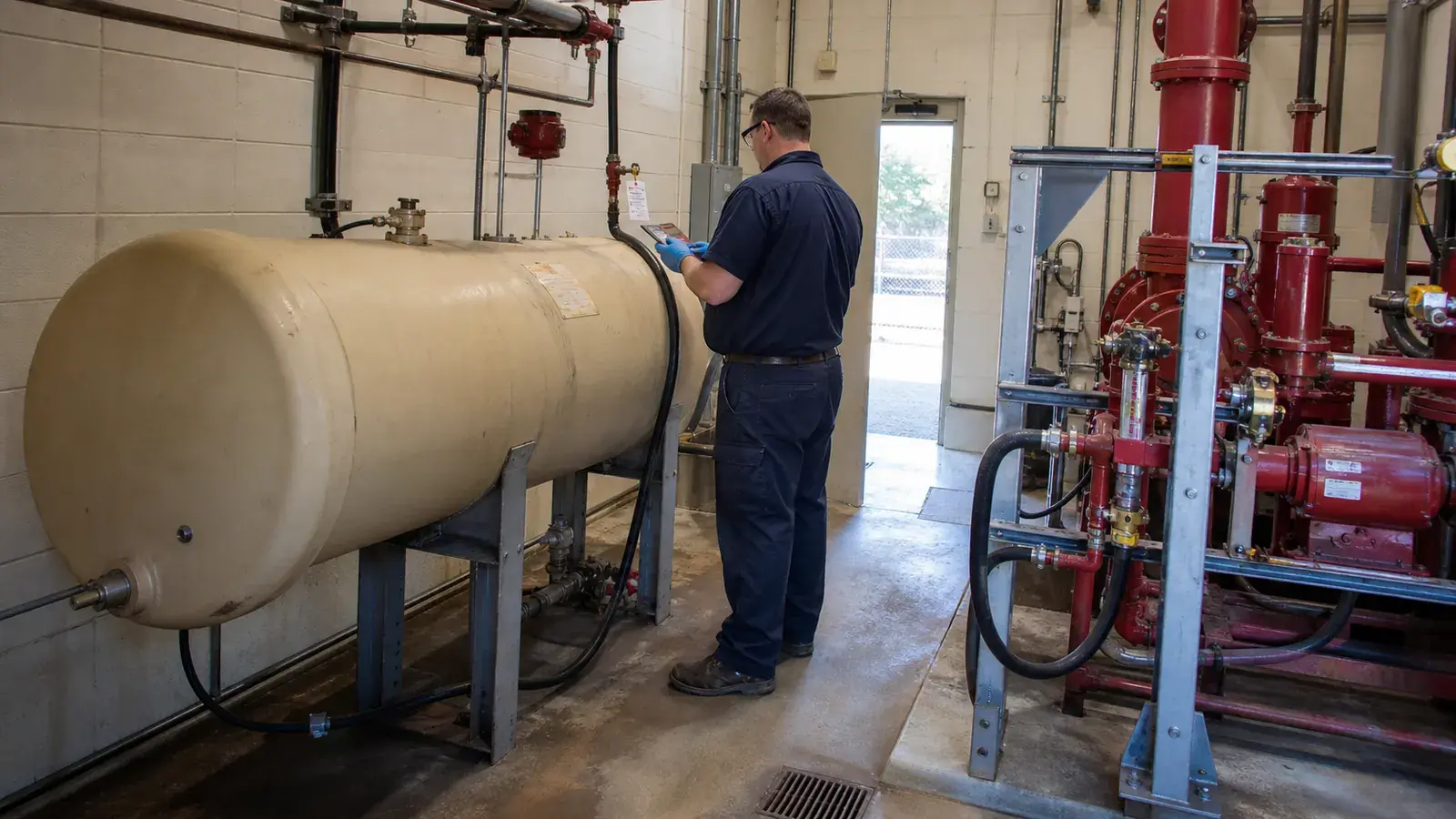
The material inventory should identify concentrate, solution, rinsate, flush water, sludge, solids, PPE, filters, absorbents, and other residuals separately. The system inventory should identify tanks, bladders, piping, proportioning equipment, vehicles, apparatus, containers, and components that may contain or retain material.
Include manufacturer, product name, approximate age, SDS files, estimated quantity, concentration or formulation information when known, physical condition, and the source of each estimate. Do not combine streams merely because they originate from the same fire-suppression system.
Define the Project Stage
A stored-product disposal project is different from an active system transition. Identify whether the facility is planning a bid, removing obsolete inventory, draining apparatus, cleaning a tank, demolishing equipment, converting to fluorine-free foam, or restructuring a system.
System status, impairment, temporary protection, engineering, design, authority approval, testing, and return-to-service requirements must be handled within the approved technical project. Website information is not authorization to disable or modify an active life-safety system.
Use the Current EPA Guidance as a Decision Framework
EPA released updated interim PFAS destruction and disposal guidance in April 2026. The non-binding guidance discusses currently available information and uncertainties for thermal destruction, landfills, and underground injection, and provides a framework for evaluating options for certain PFAS-containing materials outside consumer-product use.
The guidance is not a universal approval of a technology for every material or location. A project still requires review of the material, concentrations, receiving criteria, applicable federal and state requirements, transportation, facility conditions, contractual requirements, and documentation needs.
Define What Testing Must Answer
Sampling should begin with a decision. The project may need to characterize a waste stream, support destination review, document a baseline, evaluate a cleaning step, or satisfy a written specification. Those questions can require different media, locations, methods, containers, detection limits, and reporting formats.
A non-detect result should be interpreted in the context of the sample, method, detection and reporting limits, location, media, and project objective. It should not be converted into an unsupported universal statement that a tank, system, or property is PFAS-free.
Plan the Closeout Before Field Work
Identify which records the facility, customer, engineer, insurer, authority, contract, or internal EHS program expects. The file may involve inventories, profiles, chain of custody, laboratory reports, shipping records, receiving records, cleaning reports, construction records, testing, and final disposition documentation.
Not every project produces every record. Define the expected deliverables, acceptance points, responsible workstreams, and limitations in the approved scope before material moves or equipment is altered.
Frequently Asked Questions
Is every PFAS-containing material a hazardous waste?
No blanket classification should be made. The actual material, generator, constituents, jurisdiction, and applicable requirements determine the regulatory and project pathway.
Can AFFF concentrate and rinsate use the same profile?
Not automatically. Concentrate, diluted solution, rinsate, sludge, solids, and equipment residue may need separate descriptions, analysis, packaging, or receiving review.
Can a disposal method be guaranteed from a website request?
No. The material, current guidance, applicable requirements, location, receiving criteria, transportation, and approved scope must be evaluated first.
Official References
Regulations and guidance can change. Review the current source and applicable state requirements before making a project decision.
This article provides general information and does not replace project-specific legal, regulatory, engineering, safety, or technical advice.