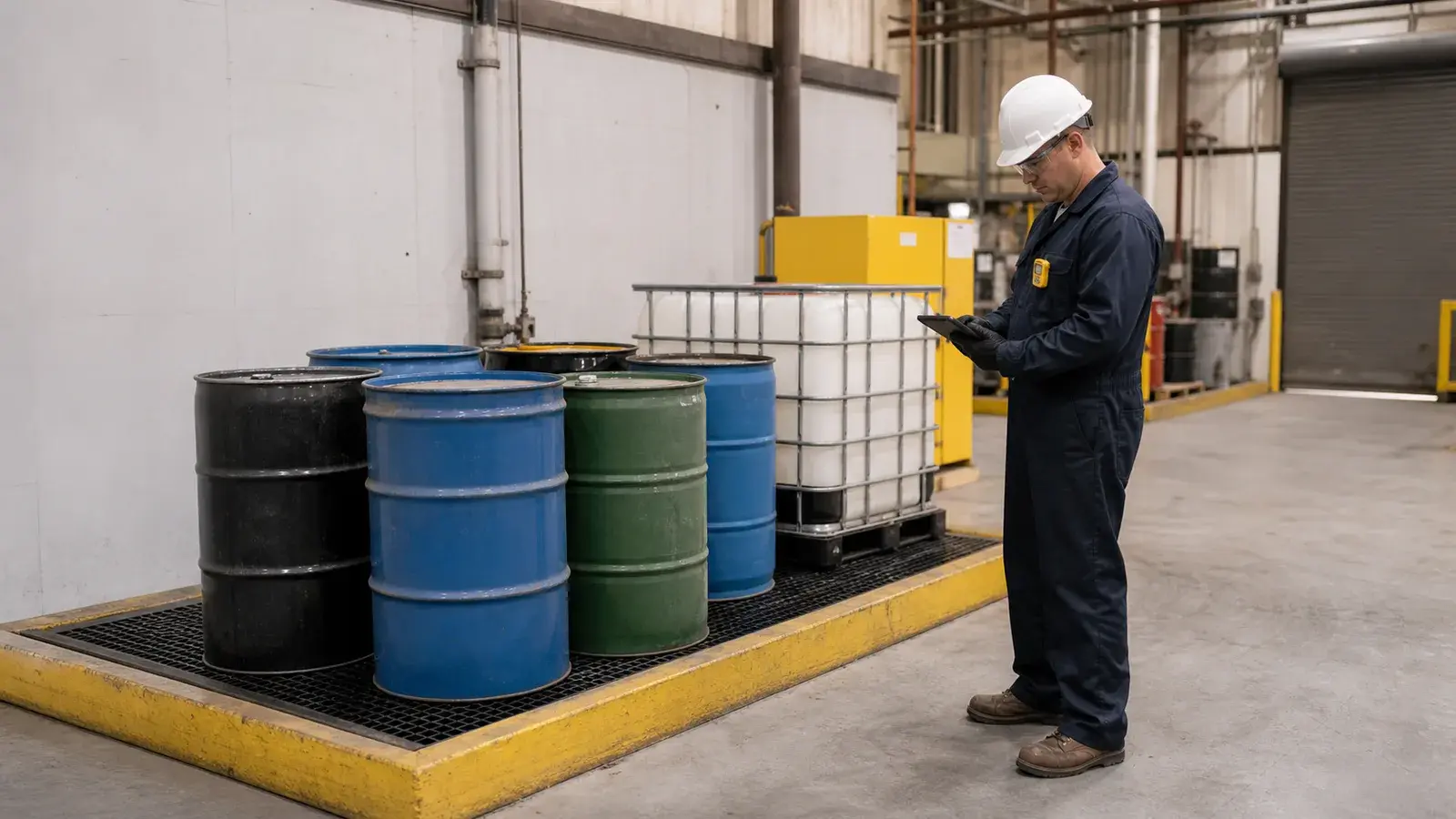
At the federal level, a very small quantity generator generates no more than 100 kilograms of non-acute hazardous waste, 1 kilogram of acute hazardous waste, and 100 kilograms of acute spill residue or soil per calendar month. A small quantity generator generates more than 100 but less than 1,000 kilograms of non-acute hazardous waste per calendar month without exceeding either acute-waste threshold. A large quantity generator generates at least 1,000 kilograms of non-acute hazardous waste, more than 1 kilogram of acute hazardous waste, or more than 100 kilograms of acute spill residue or soil per calendar month. State requirements may be broader or more stringent.
Very Small Quantity Generator
A federal very small quantity generator, commonly abbreviated VSQG, generates no more than 100 kilograms of non-acute hazardous waste, 1 kilogram of acute hazardous waste, and 100 kilograms of acute spill residue or soil per calendar month. Federal rules provide a streamlined framework, but conditions still apply to accumulation and delivery to an appropriate receiving location.
Do not assume that a small facility is automatically a VSQG. Category is determined by the waste generated in the month and can change during cleanouts, shutdowns, spills, or unusual production events.
Small Quantity Generator
A federal small quantity generator, or SQG, generates more than 100 kilograms but less than 1,000 kilograms of non-acute hazardous waste in a calendar month and does not exceed the acute-waste thresholds that trigger large quantity generator status.
EPA’s regulatory summary identifies requirements involving an EPA identification number, accumulation limits, time limits, container and tank management, preparedness, emergency procedures, personnel familiarization, manifests, and recordkeeping. The exact obligations should be checked against current federal and authorized-state rules.
Large Quantity Generator
A federal large quantity generator, or LQG, reaches the monthly quantity threshold for non-acute hazardous waste or exceeds an acute-waste threshold. LQGs operate under the most extensive federal generator standards, including detailed contingency planning and personnel training requirements.
Large quantity status can result from a one-time event. Facilities planning laboratory cleanouts, tank work, site closures, recalls, or other large projects should consider how the project may affect the monthly count before material is generated or consolidated.
Why Monthly Counting Matters
Generator category can change from month to month. A facility should understand which wastes count, when they are generated, and how acute hazardous waste affects the calculation. Accumulation areas do not remove waste from the monthly generation calculation when the waste must be counted under the rules.
An episodic generation event may provide a separate regulatory path when its requirements are satisfied, but it should be planned before the event. Website guidance cannot determine whether a specific event qualifies.
Federal Categories Are Only the Starting Point
Authorized states can impose requirements that are more stringent or broader than the federal program. A facility should check the generation state, and shipment planning should account for destination-state requirements where they apply.
A practical project file tracks the waste determination, monthly quantity, generator category, EPA identification number when required, profiles, accumulation records, manifests, and final receiving records. These documents should match the actual site and waste stream.
Frequently Asked Questions
Is generator category based on company size?
No. Federal category is based on the amount and type of hazardous waste generated at a site during a calendar month.
Can generator status change during a cleanout?
Yes. A one-time project can increase the quantity generated during that month. Plan the event against applicable federal and state requirements before the waste is generated or moved.
Are state generator rules always identical to EPA rules?
No. Authorized states may impose additional or more stringent requirements. Check the current state program for the generating site.
Official References
Regulations and guidance can change. Review the current source and applicable state requirements before making a project decision.
This article provides general information and does not replace project-specific legal, regulatory, engineering, safety, or technical advice.